NOW ACCEPTING NEW PATIENTS

Target Persistent Depression With TMS in Chicago

A depression specialist or psychiatric clinician should review your diagnosis, treatment history, medications, health conditions, and safety factors before recommending TMS.

Request your TMS consultation

Complete this confidential form in about one minute. A Mindful TMS team member will contact you within 24 hours to discuss the next step.

Please note: This is NOT a paid study. 

Please enable JavaScript in your browser to complete this form.
What location are you interested in?
Privacy Policy
FDA-cleared TMS technology icon.

FDA-cleared TMS technology

Neuronavigation-guided TMS icon.

Neuronavigation-guided TMS

Board-certified psychiatrists icon.

Board-certified psychiatrists

Insurance benefits check icon.
Insurance benefits check

TREATMENT OPTIONS

Match Depression Care to your Symptoms and History

Effective depression treatment accounts for symptom severity, previous care, side effects, health history, safety, and the effect depression has on daily functioning.

Daily coping icon

Psychotherapy strengthens daily coping

Therapy can examine the thoughts, behaviors, relationships, stressors, and practical challenges that influence depression.

Medication icon

Medication can reduce core symptoms

Antidepressants may reduce depression symptoms, although response, side effects, and treatment timelines differ by person.

Non-invasive Icon

TMS offers a noninvasive next step

TMS may be considered when medication hasn’t provided satisfactory improvement or has been difficult to tolerate.

TMS CANDIDACY

When TMS may be the appropriate next step

A depression specialist or psychiatric clinician should review your diagnosis, treatment history, medications, health conditions, and safety factors before recommending TMS.

Medication has not provided enough relief

Antidepressants have produced limited, inconsistent, or short-lived improvement despite an adequate treatment trial.

Side effects restrict continued treatment

Medication side effects have made treatment difficult to continue or prevented an effective dose from being reached.

Depression still disrupts daily function

Symptoms continue to interfere with work, relationships, routines, sleep, concentration, or essential self-care.

Clinical review supports TMS candidacy

A clinician confirms that your diagnosis, treatment history, medications, health, and safety profile support TMS.

PATIENT STORY

Inside TMS treatment for depression in Chicago

In this patient story, Michelle describes living with depression and her experience receiving BrainsWay TMS treatment.

Every TMS experience is personal, and responses vary from one patient to another. No individual result is guaranteed.

INSURANCE

TMS Insurance Coverage in Chicago

Mindful TMS accepts Medicare and most commercial insurance plans. The team checks your benefits, explains available coverage, and coordinates prior authorization when required.

SELECT INSURANCE PLANS

Coverage depends on the individual insurance plan. Mindful TMS does not accept Medicaid or most HMO plans other than Loyola Physicians Partners HMO.

TREATMENT PROCESS

What TMS Treatment for Depression Involves

TMS uses focused magnetic pulses to stimulate a planned area of the brain while you remain awake and alert. Treatment requires no surgery, incisions, or anesthesia.

Neuronavigation-guided targeting icon.

Target the planned treatment area

Neuronavigation accounts for individual anatomy and helps guide coil placement toward the area selected by the clinical team.
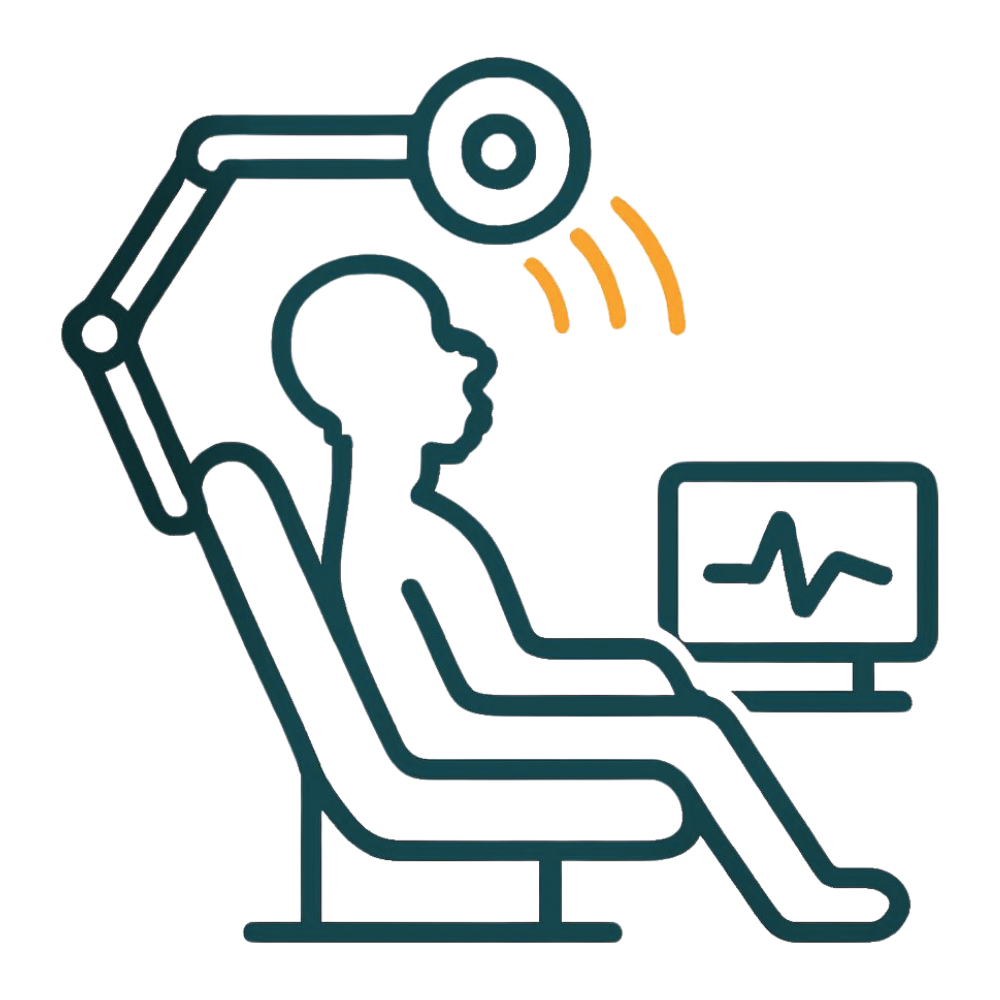
Noninvasive outpatient TMS sessions icon.

Remain awake throughout each session

A certified TMS therapist delivers and monitors the magnetic pulses while you remain alert in the treatment chair.

Treatment monitoring and coordination icon.

Track progress across the full course

A typical course includes five sessions per week for four to six weeks, with adjustments based on the prescribed protocol and response.

Common side effects include temporary scalp discomfort and headache. Tingling, facial muscle movement, or brief lightheadedness may also occur, while seizures are rare. A clinician reviews potential risks, implanted devices, medications, and neurological history before treatment.

LOCATIONS

Choose from Five TMS clinics across Chicagoland

Because TMS treatment for depression usually requires recurring appointments, selecting a convenient clinic can make completing the prescribed course more manageable.

Chicago

25 E Washington Street, Suite 1462 Chicago, IL 60602

Crystal Lake

500 Coventry Lane, Suite 290 Crystal Lake, IL 60014

Hinsdale

120 E Ogden Avenue, Suite 101 Hinsdale, IL 60521

Skokie

4711 Golf Road, Suite 535 Skokie, IL 60076

Wheaton

1737 S Naperville Road, Suite 203 Wheaton, IL 60189

COMMON QUESTIONS

Questions about Depression Treatment and TMS

What treatment for depression is most effective?

No single depression treatment works best for everyone. Psychotherapy, antidepressant medication, or a combination may be appropriate. TMS may be considered for eligible patients whose depression hasn’t improved enough with medication or who cannot tolerate medication side effects. A clinical evaluation determines the appropriate next step.

Yes. Psychotherapy and TMS are nonmedication treatment options, although neither is appropriate for every patient. Sleep, movement, social support, and daily structure may support recovery but shouldn’t replace clinical care when depression is persistent, severe, or affecting safety.

There is no universally fastest treatment. TMS usually involves repeated sessions over four to six weeks. Severe depression involving suicidal intent, psychosis, catatonia, or an inability to maintain basic safety may require emergency evaluation or faster-acting treatment in a hospital setting.

Depression symptoms can improve substantially or enter remission, but no treatment can guarantee that they will never return. Ongoing therapy, medication, maintenance TMS, healthy routines, or another treatment course may help protect progress if symptoms return.

Many commercial insurance plans and Medicare cover TMS for eligible patients who meet the plan’s medical-necessity requirements. Deductibles, copays, coinsurance, prior authorization, and treatment-history requirements vary. Mindful TMS provides complimentary benefits verification before treatment begins.

Determine if TMS fits your depression care plan in Chicago

If medication or therapy hasn’t provided enough relief, request a private consultation with Mindful TMS. The team will review your concerns, verify insurance benefits, and explain the next step toward a clinical evaluation.